Hardscaping on the NH Seacoast
Up North Scapes designs and builds patios, walkways, retaining walls, fire pits, steps, and outdoor living spaces from our base in Newmarket, NH. Every project starts with proper excavation, base preparation, and drainage.
What Hardscaping Covers
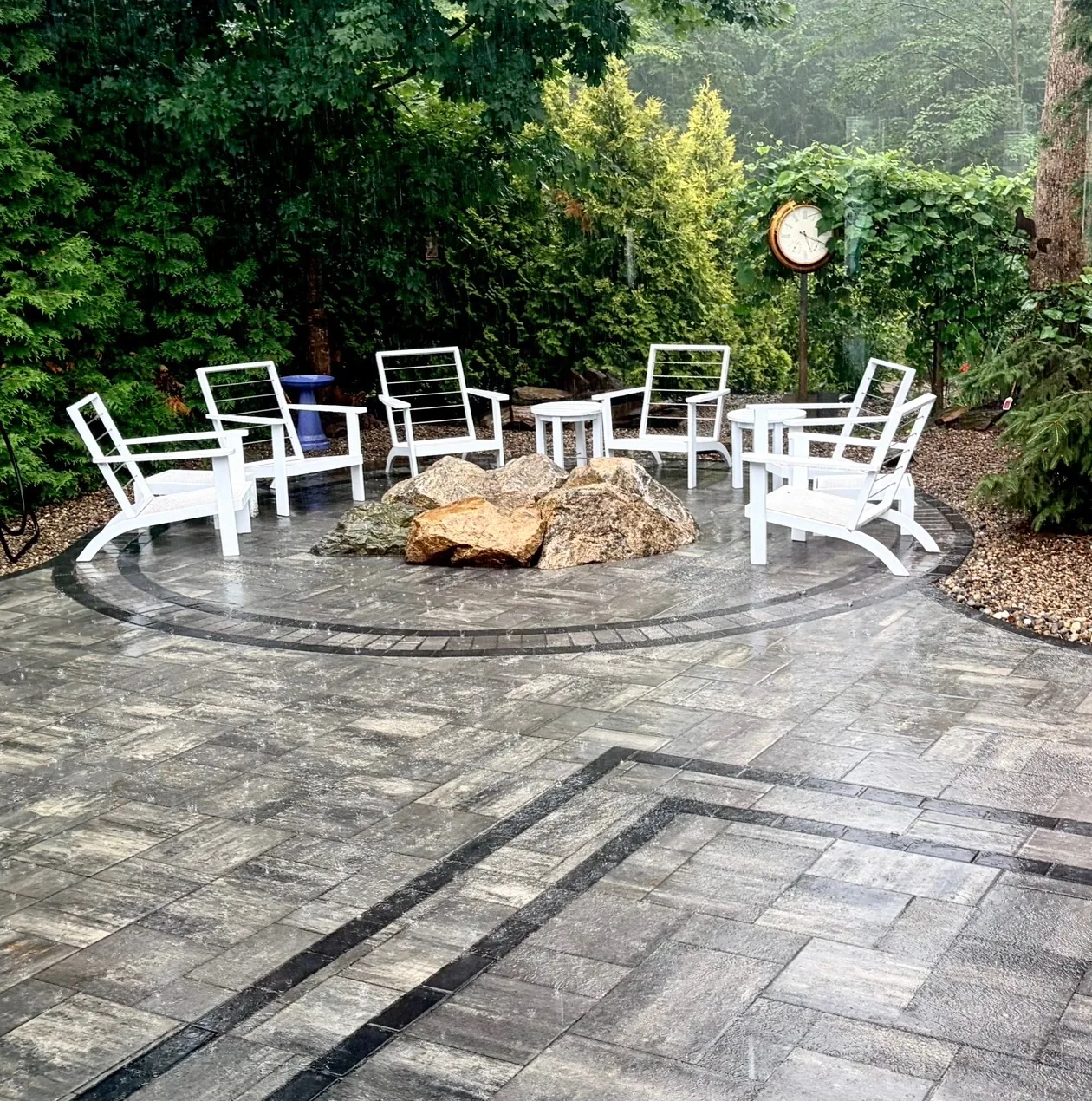
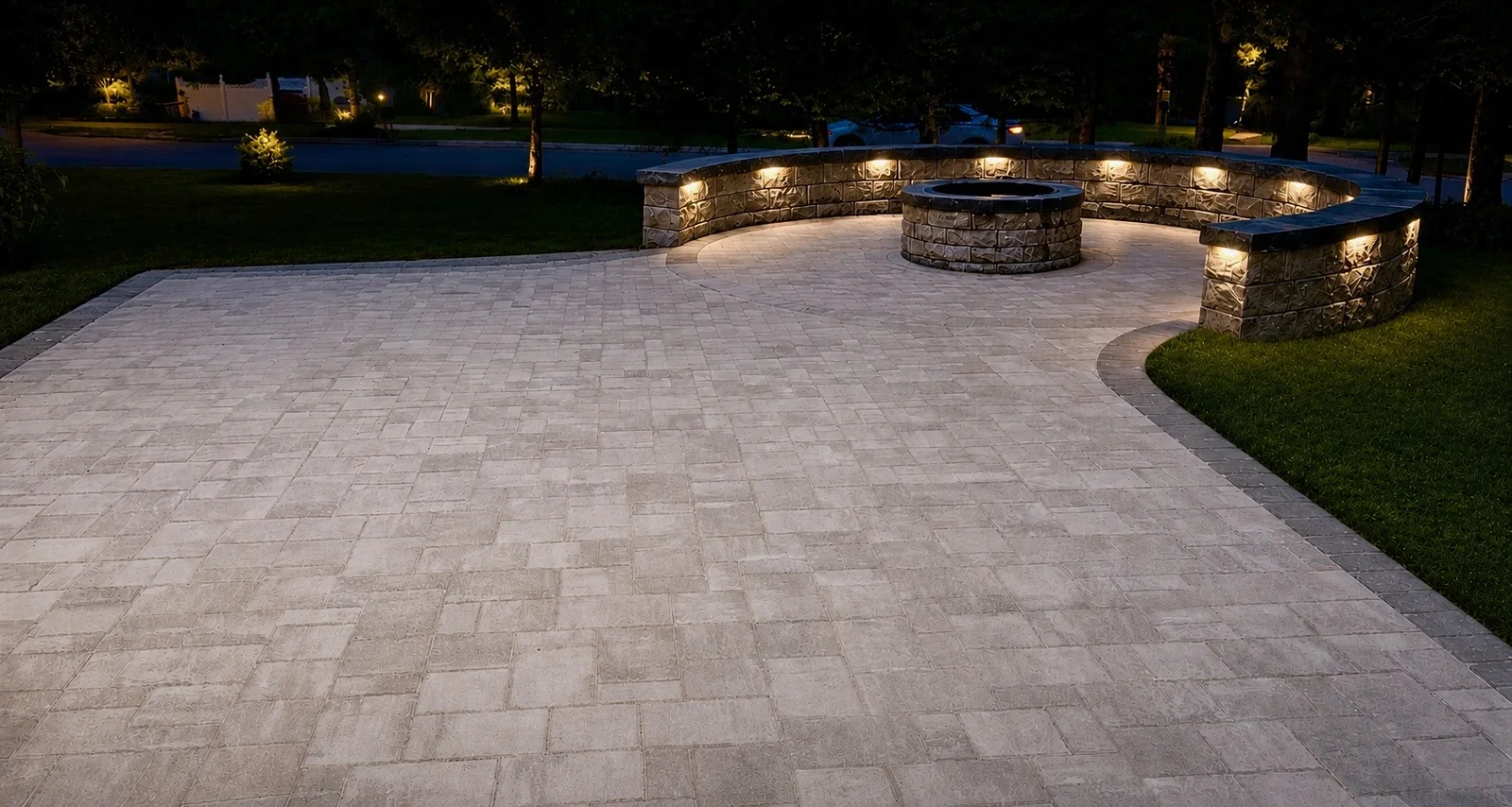
Hardscaping is the built portion of a landscape: the patios, walkways, retaining walls, steps, fire pits, and outdoor structures that give a property its shape and make it usable year round. Up North Scapes handles the full range from our base in Newmarket, NH, whether the project is a single front walkway or a complete backyard build. Each service below has its own page with photos and details.
Patios
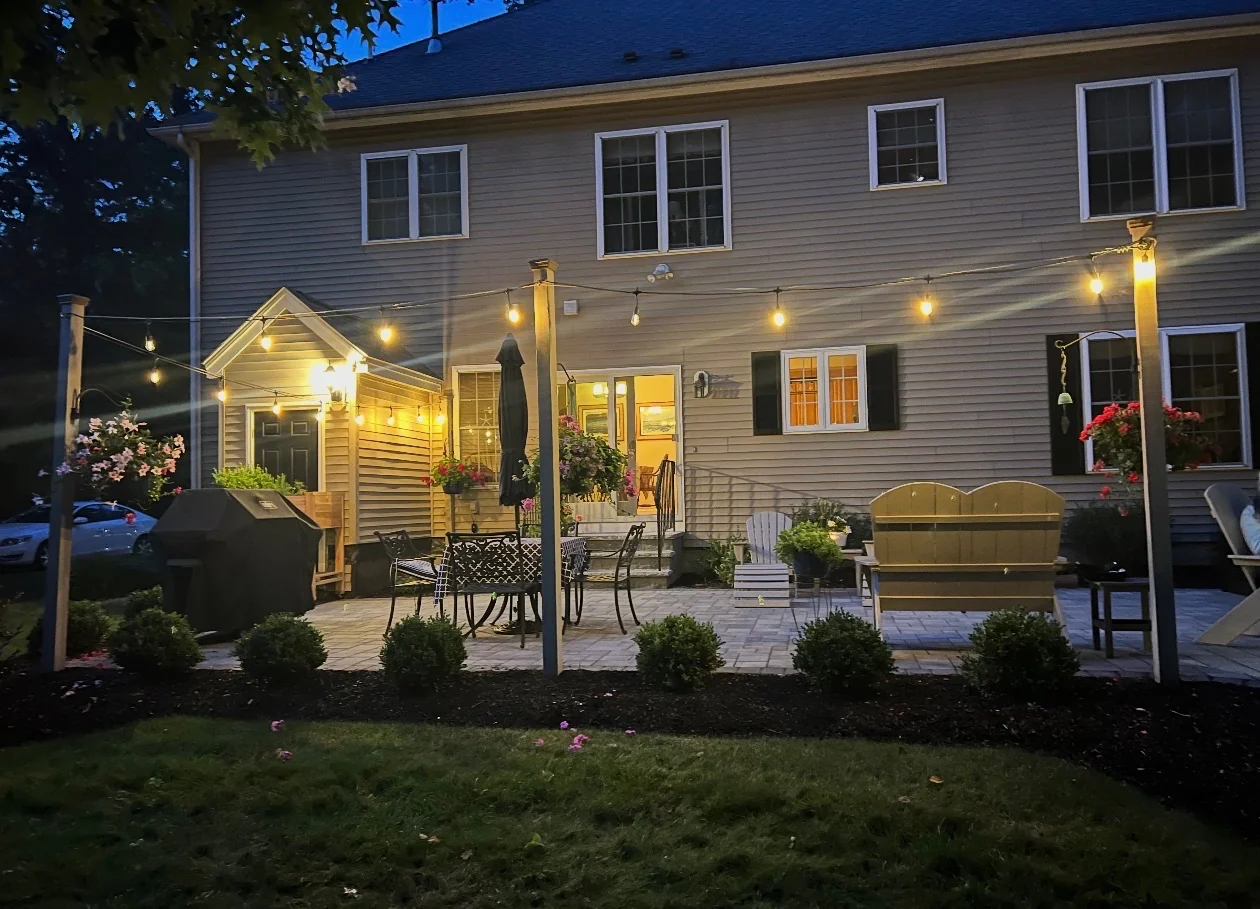
Paver and natural stone patios built on a compacted gravel base with proper pitch so water drains away from the house.
Explore Patios →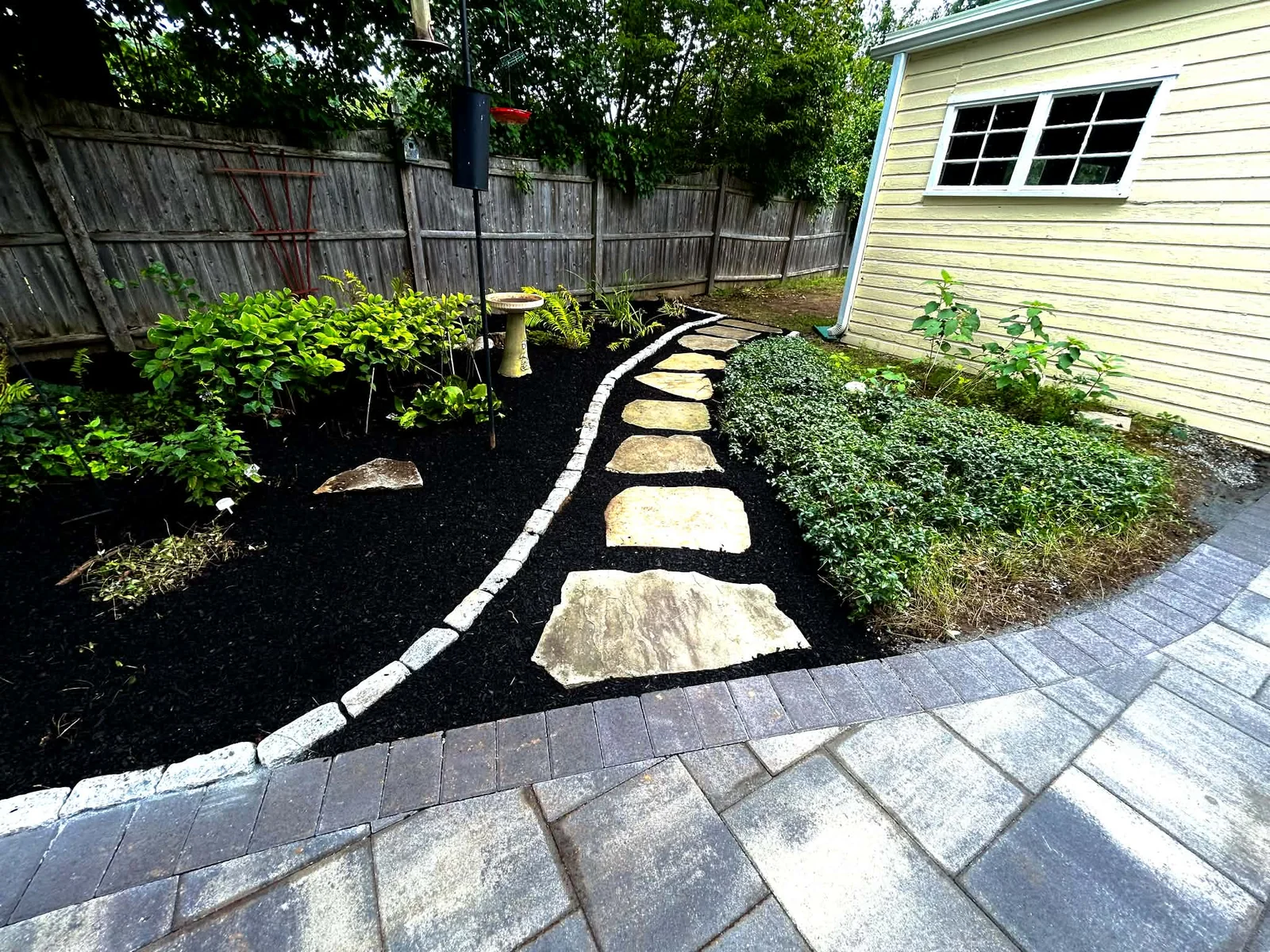
Walkways
Front entries, garden paths, and connecting walks in pavers, bluestone, and natural stone.
Explore Walkways →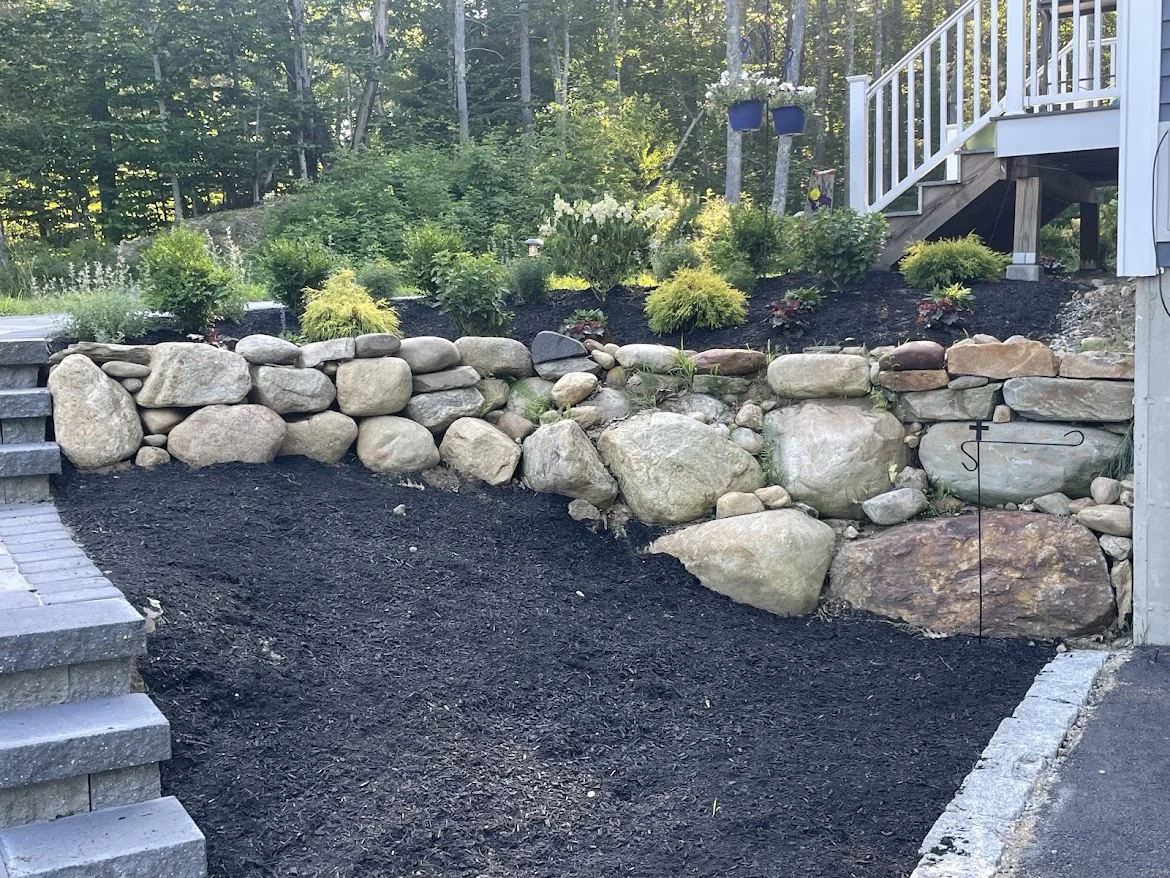
Retaining Walls
Structural and decorative wall systems built to hold grade through New Hampshire freeze and thaw cycles.
Explore Retaining Walls →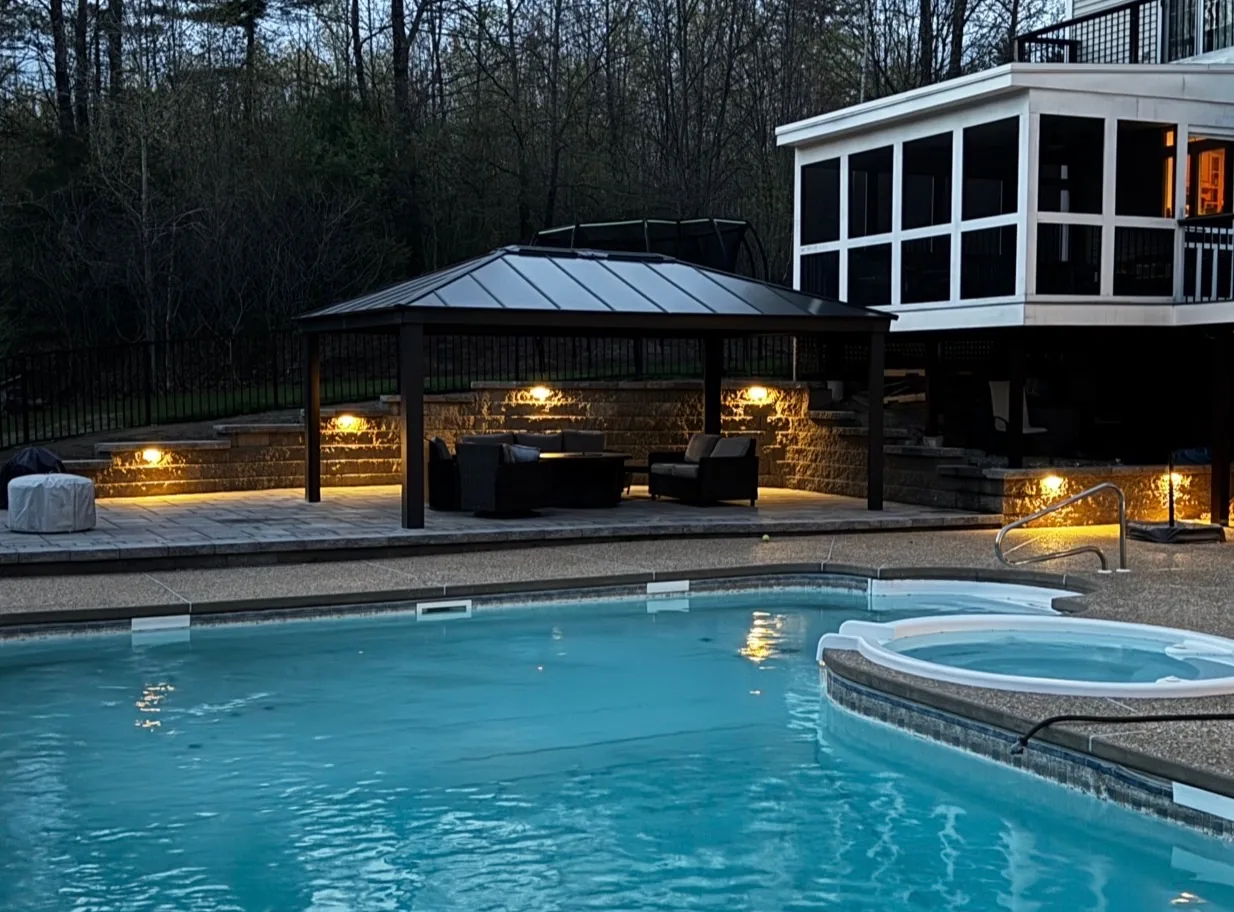
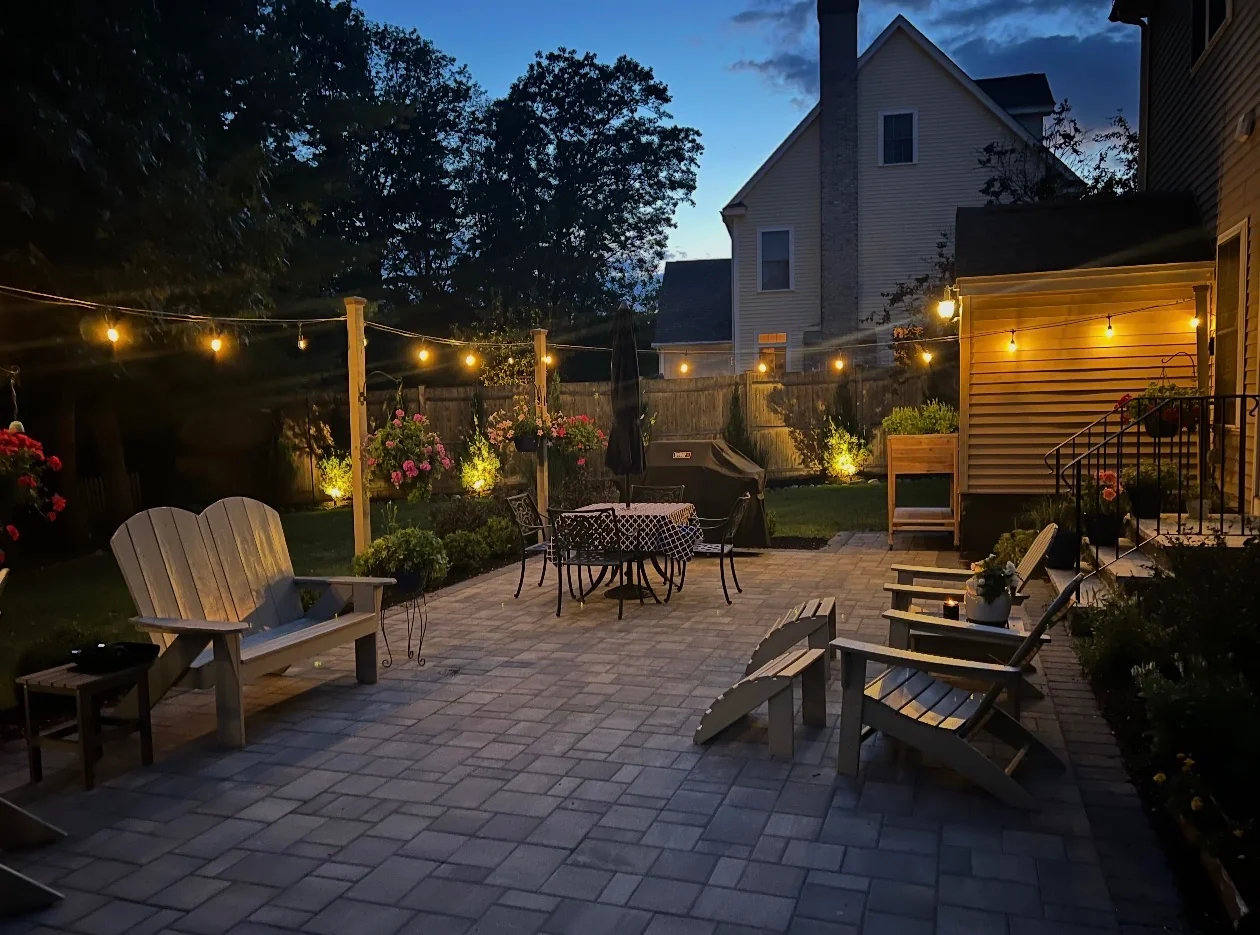
Fire Pits & Outdoor Living
Fire pits, seating walls, steps, and complete outdoor rooms designed for New England evenings.
Explore Outdoor Living →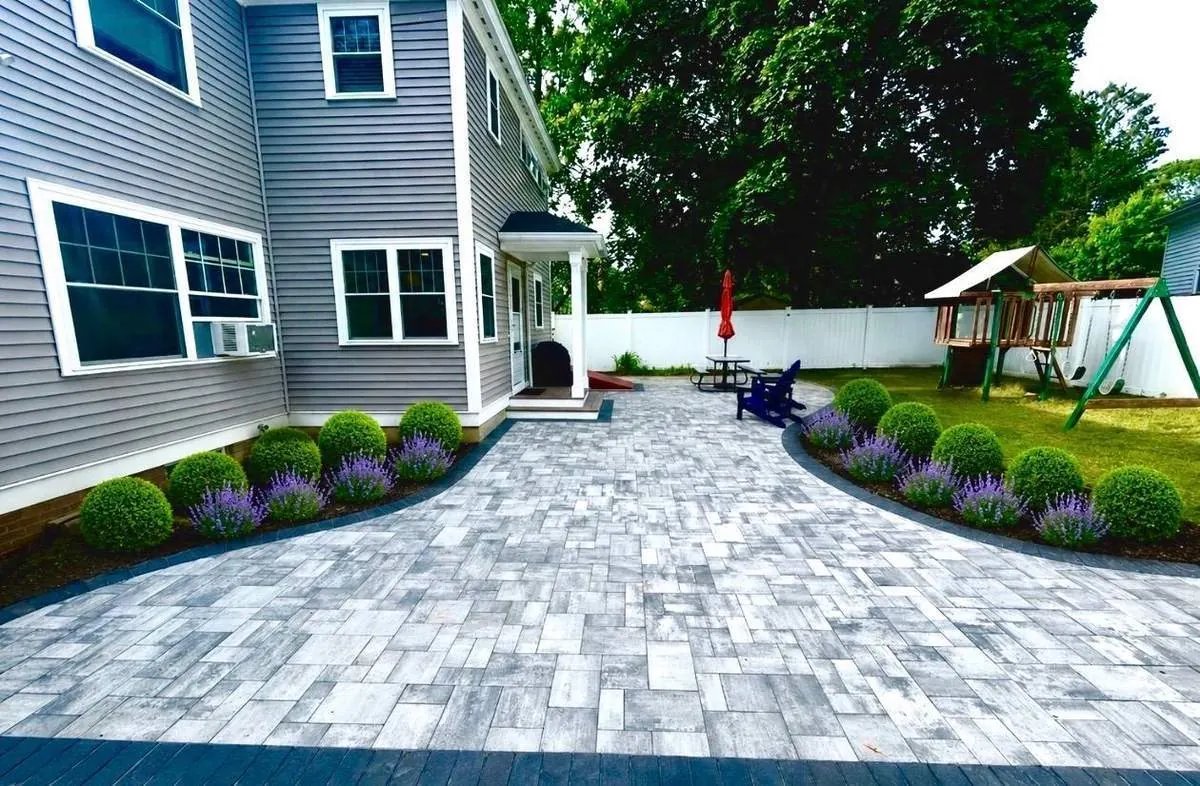
Backyard Designs
Full property plans that tie patios, walls, plantings, and lighting together into one coherent design.
Explore Backyard Designs →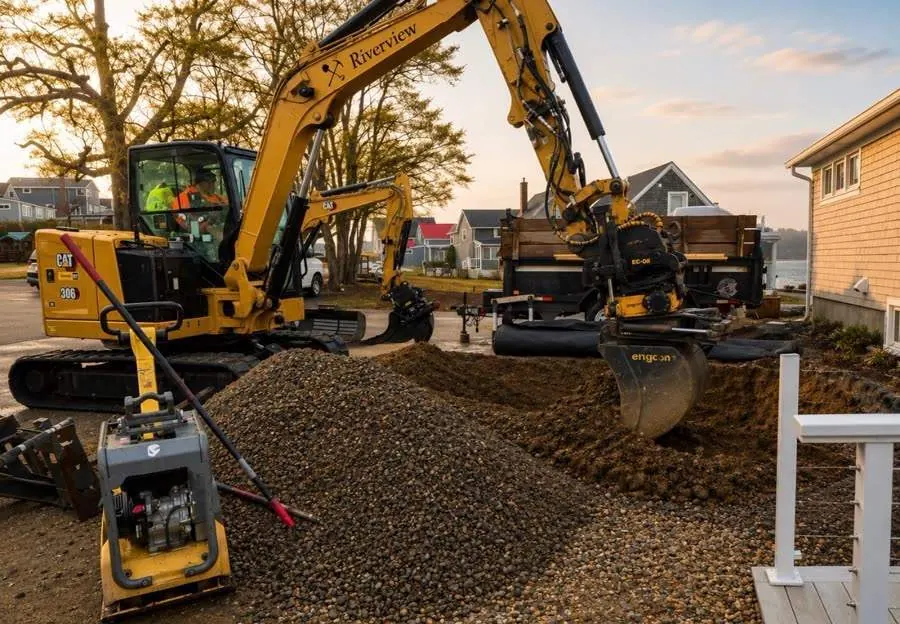
Excavation & Drainage
The groundwork under every hardscape: grading, site preparation, and drainage systems that move water where it should go.
Explore Excavation & Drainage →Base and Drainage Decide Whether Hardscape Survives NH Winters
New Hampshire ground freezes and thaws repeatedly every winter. When water is trapped under a patio or behind a wall, it expands as it freezes and pushes the structure out of position. That movement, called frost heave, is the main reason poorly built hardscape settles, tips, and separates within a few seasons.
The fix is not a better paver. It is what sits underneath: excavation to the right depth, gravel compacted in lifts, surfaces pitched away from the house, and drainage that gives water somewhere to go. That is the standard we build to on every project, in every town we serve.
Excavation to Proper Depth
We remove unsuitable material and dig to the depth the site and the structure require, not a skim install.
Gravel Compacted in Lifts
The base goes in layer by layer, compacted each time, so it cannot settle later under the finished surface.
Pitch and Surface Drainage
Every patio and walkway is graded away from structures so rain and meltwater drain where they should.
Wall Drainage and Edge Restraint
Retaining walls get drainage stone behind them, and paver surfaces get edge restraint and jointing that hold everything tight.
- +Paver patios
- +Natural stone patios
- +Walkways and entries
- +Steps and stairs
- +Retaining walls
- +Seating walls
- +Fire pits
- +Outdoor living areas
Hardscape Projects
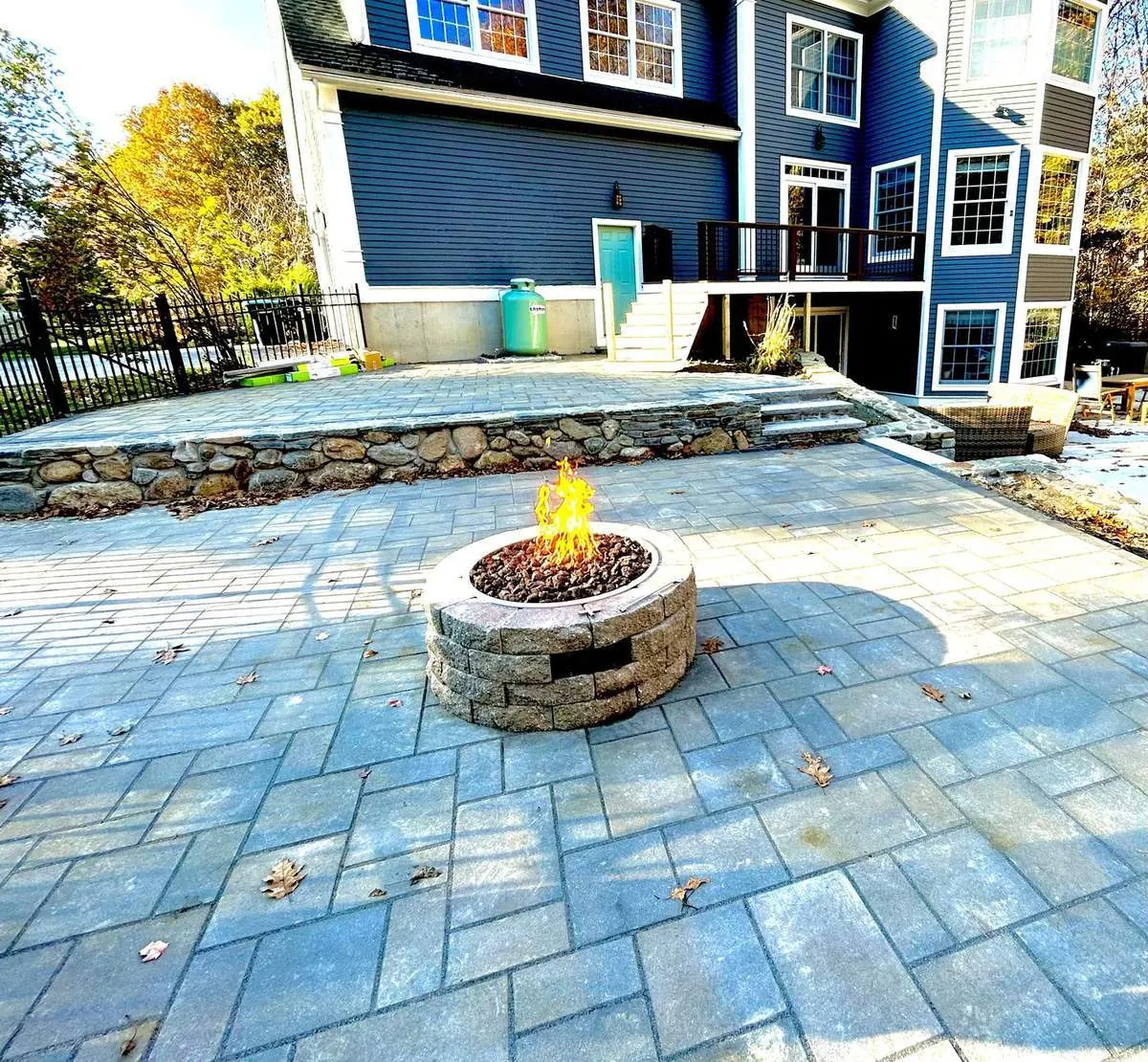
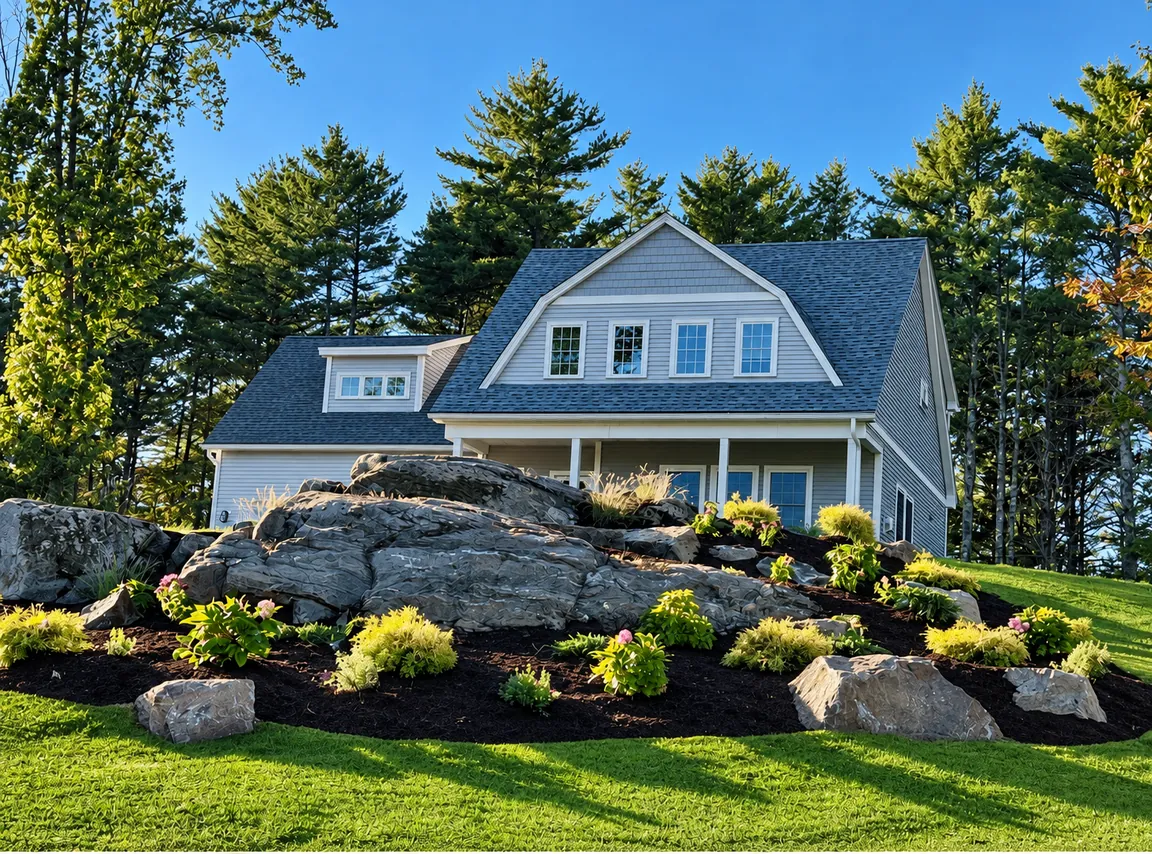
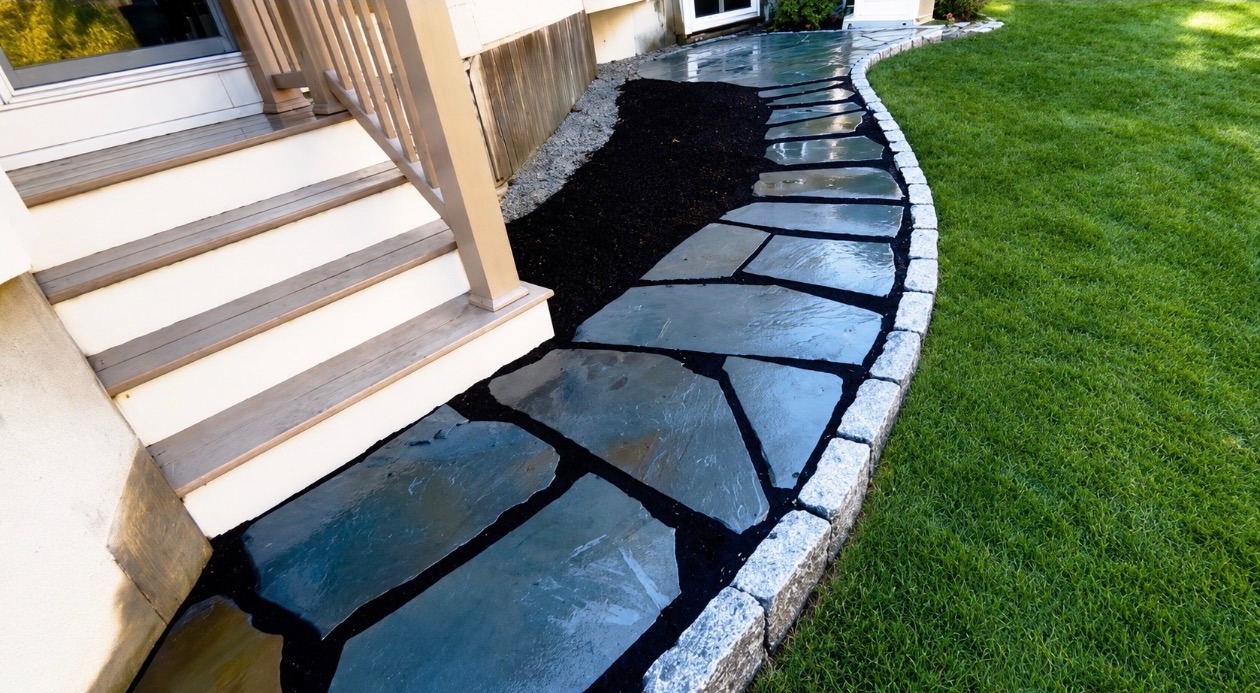
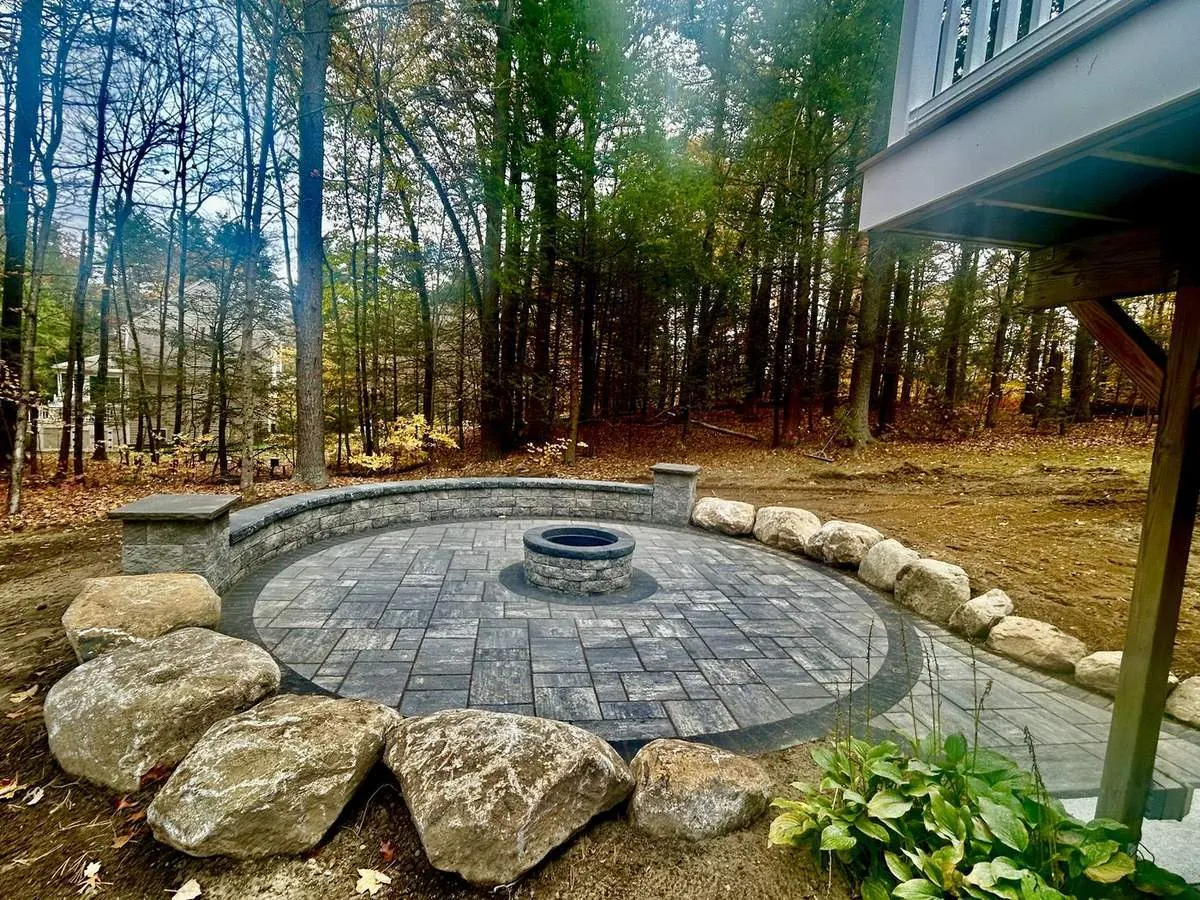
5-Star Rated on Google
“Fantastic outcome and a great company to work with. Derek, the owner, listened to our ideas and offered suggestions to help come up with our end result, which we are thrilled with! The crew that did the work were very friendly, respectful and efficient.”
Hardscaping Questions, Answered
What is hardscaping and how is it different from landscaping?
Hardscaping is the built, non-living part of a landscape: patios, walkways, retaining walls, steps, fire pits, and similar structures. Landscaping is the broader term that also covers living elements such as lawns, trees, and planting beds. Most finished properties combine the two, with hardscape providing structure and plantings softening it.
How long does a paver patio last in New England?
Decades, when it is built on a properly excavated and compacted gravel base with correct pitch and edge restraint. Freeze and thaw cycles are what kill shortcut installations: water trapped under a thin base expands as it freezes and pushes pavers out of position. A patio built on a proper base stays flat and stable winter after winter.
Do retaining walls need drainage?
Yes, soil behind a wall holds water, and that water adds pressure against the wall and expands when it freezes. A properly built retaining wall is backfilled with clean crushed gravel and includes a perforated drain at the base so water moves out from behind the wall instead of pushing on it.
When is the best season to build hardscaping in NH?
Late summer and fall are the strongest build windows in New Hampshire. The ground is typically at its driest, which makes excavation and compaction more reliable, and a project finished in fall has settled and is ready to enjoy the moment spring arrives.
Does hardscaping need maintenance?
Very little. Topping up joint sand when it wears low, occasional sweeping and rinsing, and the right ice melt in winter will keep a well built hardscape looking sharp. On concrete pavers, plain rock salt is the least damaging deicer and magnesium chloride is the one to avoid.
Towns We Serve
Up North Scapes is based at 245 South Main Street in Newmarket, NH and serves the NH Seacoast, Southern Maine, and Northern Massachusetts. We keep dedicated hardscaping pages for several of the towns where we work most often, and the full list of towns is on our service areas page.